

How RTP and Volatility Shape Your Slot Experience
You probably notice two numbers when researching slot games: RTP and volatility. Understanding both will help you make smarter choices about which machines to play, how much to stake, and what to expect from short sessions versus marathon play. This section gives you a clear, practical foundation so you can balance risk and reward according to your goals and bankroll.
What RTP really means for your bankroll
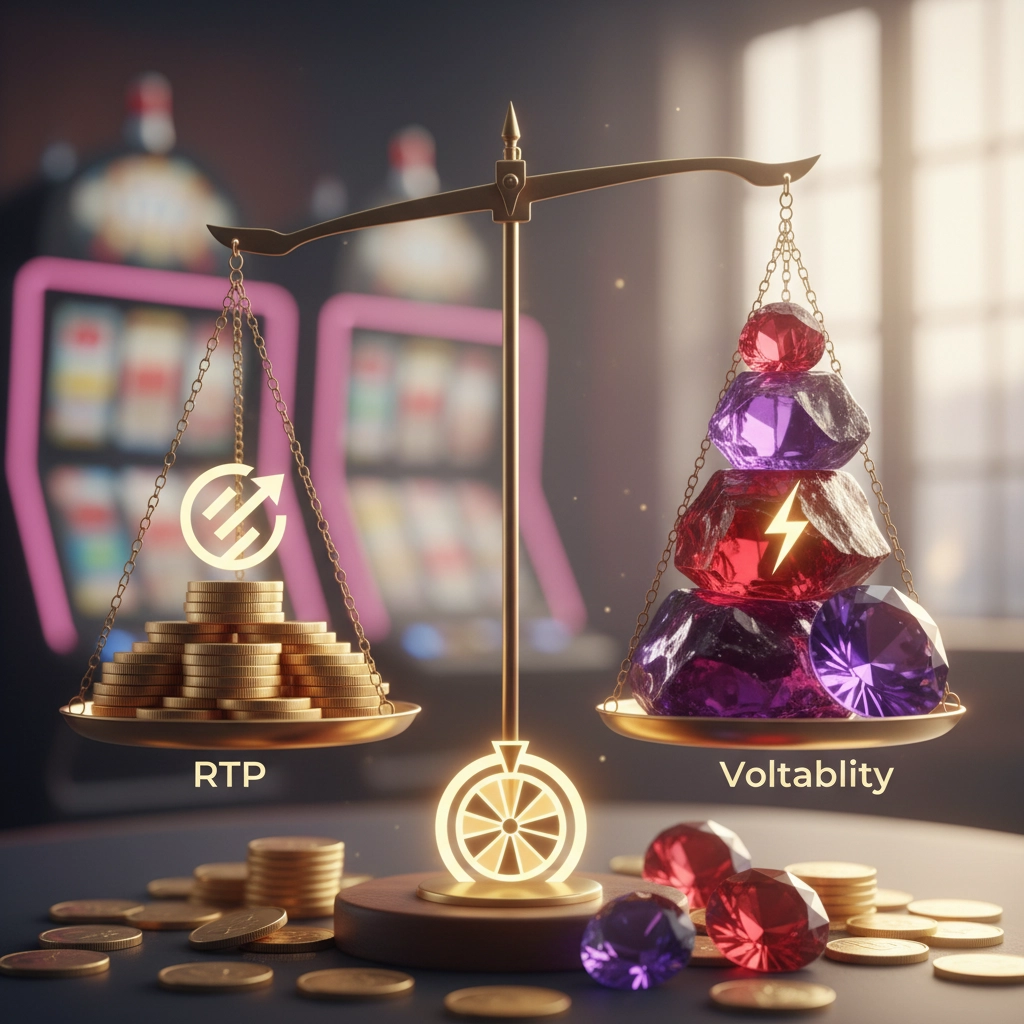
RTP stands for “Return to Player” and is expressed as a percentage. If a slot has an RTP of 96%, it means that, on average over a very large number of spins, the game is designed to return $96 for every $100 wagered. That doesn’t mean you’ll see that exact return in a single session—RTP is a long-run mathematical expectation.
- High RTP (96%–99%): You can expect smaller house edge and a better long-term return, which suits players who want steadier outcomes.
- Average RTP (92%–95%): Common in many casino slots; offers a balance between entertainment and reasonable return.
- Low RTP (below 92%): Often found in branded or feature-heavy slots; they may offer more excitement but lower expected returns.
Use RTP as a guide to long-term fairness. If you have a fixed budget and want to stretch playtime, choose higher-RTP titles. If you’re chasing big jackpots and accept lower expected returns, lower-RTP games can still be fun—just understand the trade-off.
How volatility changes your playstyle and expectations
Volatility (also called variance) describes how results are distributed over time: whether wins come frequently but are small, or rarely but are large. It’s a practical measure of risk that directly affects your session comfort and bankroll requirements.
- Low volatility: Frequent small wins. Your balance moves slowly and you face fewer long dry spells—good for casual play and limited bankrolls.
- Medium volatility: A middle ground with a mix of modest wins and occasional bigger payouts.
- High volatility: Rare big wins and long losing streaks. You need a larger bankroll and more patience; the emotional swings are bigger.
Pick volatility based on how you manage risk. If you want consistent session length and modest thrills, low volatility is preferable. If you aim for a life-changing prize and can withstand long stretches without wins, high volatility may suit you.
Quick comparison to guide your game selection
- Long sessions + low risk → choose high RTP + low volatility.
- Balanced entertainment and budget → choose medium RTP + medium volatility.
- High-stakes excitement → accept lower RTP + high volatility.
With these basics in hand, you’re ready to learn how RTP and volatility interact numerically, how to estimate session outcomes, and which strategies help protect your bankroll—topics we’ll explore next.

Modeling RTP and Volatility: Estimating Session Outcomes
RTP gives you the long-run expectation; volatility tells you how results scatter around that expectation. Putting them together lets you make simple, realistic estimates for a session. Start with two basic formulas:
- Expected return per spin = Bet × RTP (so expected loss per spin = Bet × (1 − RTP)).
- Average win size (conditional on a win) ≈ (Bet × RTP) / Hit frequency. If a game returns $0.96 on average per $1 spin and wins occur 5% of the time, the average win when it hits is about $19.20.
Those relationships explain why two games with the same RTP can feel so different. Example: both games have 96% RTP and $1 bets. Game A is low volatility with a 50% hit frequency, so average win ≈ $1.92; Game B is high volatility with a 5% hit frequency, so average win ≈ $19.20. Both return $0.96 on average per spin, but Game B produces infrequent big swings while Game A delivers steady, small gains.
To estimate what you might experience in a session, multiply expected loss per spin by the number of spins you plan to play to get a baseline bankroll drain. Then factor volatility qualitatively: high volatility means a much wider likely band of outcomes around that baseline. For example, a 500-spin session at $1 on a 96% RTP game predicts an average loss of $20 (500 × $0.04), but on a high-volatility title you could either be down several hundred dollars or up significantly depending on whether you hit a big payout.
If you want a slightly more rigorous feel for variance, pay attention to hit frequency and average win size supplied by reviews or game RTP breakdowns. Larger average wins and lower hit frequencies imply greater standard deviation and thus longer streaks of losses or wins.
Practical Bankroll Strategies for Different Slot Profiles
Choosing a slot is only half the battle—how you size bets and structure sessions matters just as much. Use these practical, bankroll-focused rules of thumb:
- Low volatility + high RTP: Small bets relative to your bankroll (0.5%–1%) work well. You’ll get many spins and steady entertainment. Ideal for stretching playtime on a modest budget.
- Medium volatility + medium/high RTP: Aim for bet sizes of about 1%–2% of your session bankroll. This balances the chance of catching mid-sized wins without blowing the bank on an unlucky run.
- High volatility (jackpots/feature-heavy) even if RTP is reasonable: Limit bet sizes to 0.1%–0.5% of a bankroll earmarked for chasing big wins. Expect long dry spells; only use money you can afford to lose. If you aim for a progressive jackpot that requires max bet, budget separately for “jackpot attempts” rather than risking your whole bankroll.
Another practical approach is session budgeting: decide how many spins you want (e.g., 200 spins) and set your bet so expected loss fits your tolerance (Expected loss = spins × bet × (1 − RTP)). That gives a clear, numerical limit before you play and prevents emotional over-betting during streaks.
Tools and Tactics to Manage Risk During Play
Beyond bet size, adopt simple tactics that reduce the emotional and financial harm of volatility:
- Use demo mode first. Play 100–500 demo spins at your intended bet level to observe hit frequency and feature triggers without risking money.
- Set strict stop-loss and take-profit thresholds. For example, walk away after losing 30% of your session bankroll or after a 50% win—this preserves gains and limits catastrophic losses.
- Adjust bets dynamically but conservatively. If you’re ahead, consider lowering bet size to lock in playtime; if chasing a big win (and bankroll permits), allocate a small separate stake for higher-risk spins rather than increasing base bets across the full bankroll.
- Track results and recognize patterns. Keep a quick session log (stakes, spins, notable hits). Over time this helps match your preferences to specific games’ real-world behavior rather than relying solely on advertised RTP/volatility labels.
Combined, these modeling and practical techniques help you make informed choices: choose games whose RTP and volatility align with your goals, size your bets to survive likely swings, and use limits and demo play to keep risk within comfortable bounds.
Putting Risk and Reward into Practice
Knowing how RTP and volatility interact gives you a practical mindset more than a crystal ball. Treat game statistics as tools: use demo play to learn feel, set clear bankroll rules before you start, and separate money for different goals (casual play vs. chasing jackpots). Keep emotions out of bet sizing—decisions you make when calm will protect your bankroll and keep the experience enjoyable. If play ever stops being fun or you need guidance on limits, seek support from professional resources such as GambleAware.
Frequently Asked Questions
Does a higher RTP guarantee I will win more often?
No. RTP is a long-run average across millions of spins and doesn’t change short-term outcomes. A higher RTP reduces the house edge over extended play, but hit frequency and volatility determine how often and how large individual wins occur.
How should I choose volatility for my bankroll?
Match volatility to your risk tolerance and session goals: choose lower volatility for steadier play and smaller bankrolls, and higher volatility only if you can tolerate long losing stretches while aiming for larger payouts. Also size bets so you can survive expected swings rather than chasing losses.
Can I trust the RTP and volatility information advertised by a game?
Generally yes—licensed providers publish RTP and independent labs audit RNGs—but labels like “low” or “high” volatility can be subjective. Look for verified RTP figures, independent certification (e.g., testing labs), and player reviews or demo play to confirm a game’s real-world behavior.