
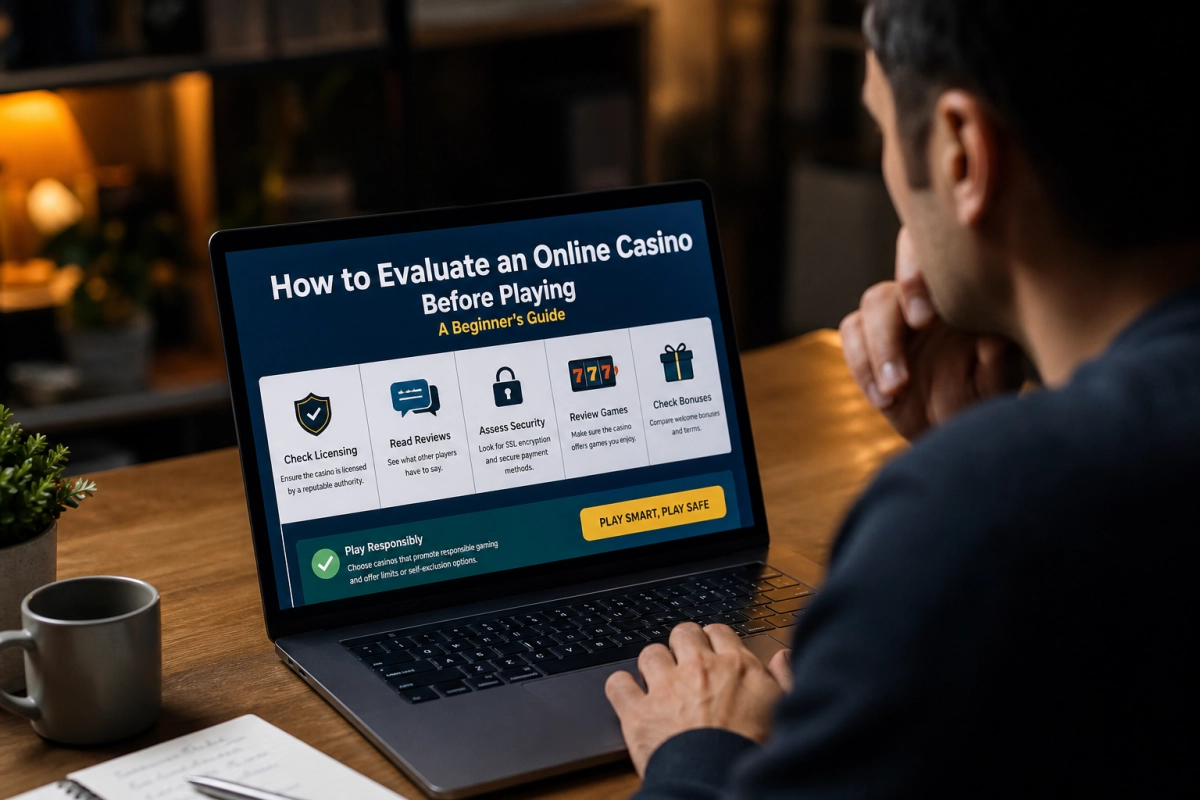
How to Evaluate an Online Casino Before Playing
Why an Online Casino Should Be Checked First
Choosing an online casino should involve more than comparing welcome offers or browsing popular games. A careful evaluation helps players understand whether an operator is legitimate, whether games such as roulette, poker, blackjack and baccarat are presented fairly, and whether deposits and withdrawals are handled securely.
The most reliable approach is to check the operator’s licence, ownership details, game testing, account security, payment rules and customer support before depositing money. These checks cannot remove the mathematical house edge from casino games, but they can reduce the risk of dealing with an unsafe or unreliable website.
Players in Tanzania should also consider whether the operator is legally available in their location. The Gaming Board of Tanzania is responsible for licensing and regulatory oversight of gaming operators. A casino’s website should clearly display its legal company name, licence information and contact details. The information should then be compared with the regulator’s official records rather than accepted solely because it appears on a review page or advertisement.
How to Check an Online Casino Licence
A licence indicates that an operator is subject to regulatory requirements, although it is not an absolute guarantee that every experience will be trouble-free. A licence check should include the following steps:
- Find the licence details: Look for the licence number, issuing authority, legal company name and registered address in the website footer or terms and conditions.
- Match the information: The company name and licence number should correspond with the records of the relevant gambling regulator. A logo alone is not sufficient evidence.
- Check the permitted services: The licence should cover the type of online gambling offered, including casino or table games where applicable.
- Review availability: The operator should state whether players in Tanzania are accepted and which local rules apply.
Unclear ownership, a missing licence number, copied regulatory badges or contradictory company information are warning signs. A trustworthy operator should also explain how complaints are handled and identify the regulator or dispute process available if a problem cannot be resolved directly.
Assessing Game Fairness and Account Security
Casino games use either a random number generator (RNG) or, in live casino formats, physical cards, wheels and dealing equipment. An RNG is software designed to produce unpredictable results. Independent testing does not make a player more likely to win, but it can provide evidence that results are not deliberately manipulated.
Before playing, a casino’s fairness information should identify:
- the testing company or audit process;
- whether roulette, blackjack, baccarat and other games use certified RNGs;
- the published return-to-player information where relevant; and
- the house edge or rules for each game variant.
Security is equally important. The website should use encrypted connections, provide secure login controls and explain how personal information is stored. Two-factor authentication is a useful extra layer where available. Account verification, often called Know Your Customer (KYC), may require identification documents before withdrawals. This is normal, but the timing and requirements should be explained before any deposit is made.
Next, the evaluation should focus on payment methods, withdrawal conditions and the terms that can affect access to winnings.
Comparing Payment Methods and Withdrawal Conditions
Payment options should be assessed for both convenience and control. A reputable casino should explain which methods are available to players in Tanzania, the currencies supported, minimum and maximum transaction limits, processing times and any applicable fees. Common options may include bank cards, bank transfers, mobile money or approved electronic wallets, but availability can depend on the operator and the player’s location.
Deposits are often processed immediately, while withdrawals may take longer because of security checks or manual approval. This is not automatically a problem, but the casino should provide a reasonable estimated timeframe instead of leaving requests open-ended. Check whether a withdrawal must be returned through the original deposit method, whether a minimum withdrawal amount applies and whether the operator charges fees for particular methods.
Never use a payment account belonging to another person. The casino may reject the transaction or delay verification if the name on the payment method does not match the gambling account. Players should also keep transaction records and avoid depositing more than they can afford to lose.
Reading Terms and Conditions Before Accepting an Offer
Terms and conditions explain the rules that apply to accounts, bonuses, deposits and withdrawals. They should be accessible before registration or payment and written clearly enough for a new player to understand. Pay particular attention to bonus wagering requirements, eligible games, maximum bet limits, expiry dates and restrictions on withdrawing promotional funds.
Other important clauses may cover duplicate accounts, inactive-account fees, identity checks, maximum payouts, transaction reversals and the circumstances in which an account can be suspended. A casino may have the right to close an account where fraud or rule-breaking is suspected, but vague wording giving the operator unlimited discretion deserves caution.
Promotional advertising should match the full terms. An offer described as “free” may still require a deposit, wagering multiple or minimum odds before a withdrawal is permitted. If a condition is difficult to find, contradictory or changed after registration without proper notice, it is safer not to accept the promotion.
Testing Support, Gambling Controls and Operator Reliability
Customer support should be tested before money is deposited. Contact options may include live chat, email or telephone, and the casino should state its operating hours and expected response times. Ask a simple question about withdrawals, verification or a bonus and assess whether the answer is specific and consistent. Support that avoids direct answers, relies only on automated messages or cannot explain the complaints process is a concern.
Responsible gambling tools are another important part of the evaluation. Look for deposit, loss or wagering limits, session reminders, reality checks, cooling-off periods and self-exclusion. These tools should be easy to activate, and the operator should provide links to relevant support organisations. A casino that encourages urgent deposits, targets players with constant promotional messages or makes it difficult to close an account should be avoided.
Warning signs often become clearer when several problems appear together: copied licence claims, unclear ownership, unexplained withdrawal delays, changing terms, pressure to deposit, poor support and requests for unnecessary personal information. No single issue proves that an operator is fraudulent, but multiple warning signs justify stopping, saving the evidence and checking the regulator’s records before proceeding.
Make the Decision Before You Deposit
A few minutes of careful checking can prevent avoidable problems later. If an operator is transparent, easy to contact and clear about its rules, it is better placed to earn your trust. If important information is missing or pressure is being applied, there is no need to proceed.
Only play when you understand the risks, the rules and the limits available to you. Treat gambling as paid entertainment rather than a way to make money, and be prepared to stop if it no longer feels controlled or enjoyable.