
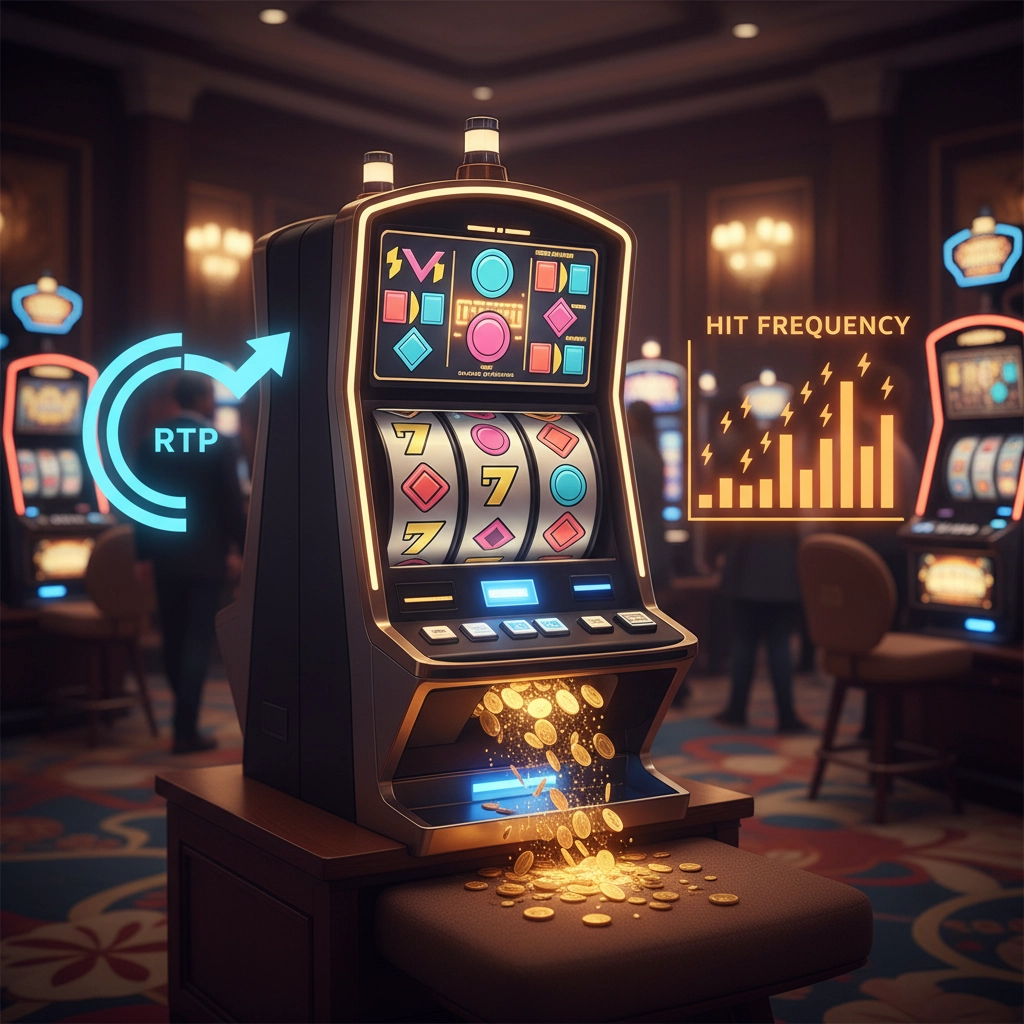
How RTP and hit frequency shape what you can expect from a slot
When you sit down at a slot — online or in a casino — two numbers quietly determine much of your experience: the theoretical return-to-player (RTP) percentage and the hit frequency (sometimes called hit rate). You should think of RTP as the long-term expectation and hit frequency as the rhythm of wins during a session. Understanding both helps you set realistic expectations, plan bankrolls, and pick machines that match the playing style you prefer.
RTP: the long-run percentage that guides expectations
RTP is expressed as a percentage (for example, 96%). It represents the average portion of stakes paid back to players over a very large number of spins. If a slot has a 96% RTP, that means, on average, players receive $96 back for every $100 wagered — but only across millions of spins. You should keep in mind:
- RTP is theoretical and applies to the long term, not a single session.
- Short sessions can deviate wildly from RTP — you may win big or lose faster than the percentage suggests.
- Higher RTP reduces the house edge and can be a practical filter when choosing games.
Hit frequency: the short-term pattern that affects your playstyle
Hit frequency tells you how often a spin results in any payout, not how large that payout will be. A slot with a high hit frequency pays out small wins more often; a low hit frequency pays out less often but may offer larger payouts when it does hit. For example, a machine with a 30% hit frequency might pay something back roughly once every three spins, whereas a 10% hit frequency will feel much drier but potentially more volatile.
Why both metrics matter when you choose a slot
RTP and hit frequency together explain both the expected value and the emotional experience of a machine. You might prefer:
- High RTP + high hit frequency: smoother sessions with frequent small wins and lower variance.
- High RTP + low hit frequency: rare, bigger wins but still favorable long-term value.
- Low RTP + high hit frequency: frequent small wins but poorer long-term value.
Additionally, volatility (often tied to hit frequency) interacts with your bankroll. If you have a limited budget, a higher hit frequency can help you stretch playtime and reduce the chance of busting quickly. Conversely, if you’re chasing large jackpots, you may accept low hit frequency and plan for larger swings.
Next, you’ll learn practical strategies for applying RTP and hit frequency to bet sizing, machine selection, and session planning so you can manage risk and maximize enjoyment.

Bet sizing and bankroll rules tied to RTP and hit frequency
Practical bet sizing starts with matching your stake to both the slot’s volatility and the size of the bankroll you’re willing to risk. RTP gives you a long-run expectation but tells you nothing about how quickly your money will swing. Hit frequency (and inferred volatility) tells you whether those swings will be frequent but small or rare and large — and that determines how conservative your per-spin bet should be.
Simple, practical rules:
– For low-volatility, high hit-frequency games: you can afford larger bets per spin because frequent small wins help you sustain play. A common approach is to limit each bet to about 0.5–1.5% of your session bankroll. That keeps sessions entertaining without risking ruin on a few spins.
– For medium volatility: scale back to roughly 0.2–0.5% per spin. This balances the chance of hitting mid-size rewards with preserving playtime.
– For high-volatility, low hit-frequency games or when chasing progressive jackpots: be conservative — 0.05–0.2% per spin is safer. The goal here is to survive long enough for the infrequent big hit to occur.
Use session bankrolls, not total funds. Decide in advance how much you’ll allocate for a single session (for example, $100 out of a $500 gambling budget) and size bets off that number. This prevents emotional “chasing” when a session goes south.
Also consider bet steps: set a fixed number of spins you want to afford at your chosen bet size (e.g., 500 spins). If the machine’s hit frequency is low, choose smaller bets to reach that target spin count. Conversely, if you prefer shorter sessions, you can increase your bet within the risk limits above.
Finally, always factor in promos and bonuses. A free spins offer or deposit match temporarily improves your effective bankroll and can justify slightly larger absolute bets — but treat bonus money as extra, not a reason to gamble beyond your limits.
Picking machines: reading paytables, volatility clues, and demo testing
Not every slot lists hit frequency or an explicit volatility rating, but you can still estimate how a game will behave by examining its paytable, bonus structure, and accessible play modes.
What to look for in the paytable:
– Many low-value win lines or small-paying symbol matches usually indicate higher hit frequency (more frequent small wins).
– A paytable dominated by a few very large payouts with long tails suggests low hit frequency and high volatility.
– Bonus mechanics that require several specific triggers (scatter symbols, collecting meters) tend to reduce base-game hit frequency and concentrate value in bonus rounds.
Other practical clues:
– Volatility tags: some providers or casinos label games as “low/medium/high volatility.” Use them as a first filter but verify with other cues.
– Bonus trigger rates in demo: play a slot in demo mode for several hundred spins. Note how often the bonus round or free spins trigger and how large the average bonus payout is. While demo spins aren’t a guarantee, they give useful intuition about rhythm and variance.
– Progressive jackpots and max-bet requirements: these often change optimal bet sizing. If a jackpot requires max bet or is funded from a portion of stakes, treat the play as a separate strategy — small edge in pursuit of a large prize, so reduce base bet size elsewhere.
Using these techniques lets you match machines to your goals: steady entertainment and longer sessions, or short-shot jackpot hunting with a properly scaled bankroll.
Putting RTP and Hit Frequency to Work
RTP and hit frequency are practical lenses for shaping how you play, not guarantees of outcomes. Use them to build a clear, discipline-based plan: pick machines that match your session goals, set session bankrolls and bet limits, test in demo mode, and keep records so you learn what works for you. Remember to treat volatility as the rhythm of play — it dictates the tempo, not the destination.
Keep your focus on process over promises. Decide before you sit down what a successful session looks like (enjoyment, time spent, or a specific return), and let that goal drive bet sizing and machine choice. If you ever feel your play slipping from a planned approach, pause and use available tools or support to reset — for example, BeGambleAware offers guidance and resources for safer play.
Frequently Asked Questions
What is hit frequency and how is it different from RTP?
RTP (return to player) is a long-term percentage of stakes a game is designed to return over many spins. Hit frequency measures how often the game produces any winning outcome on a single spin. RTP speaks to expected long-run value; hit frequency describes the short-run rhythm and perceived volatility.
How can I estimate a slot’s volatility or hit frequency if the game doesn’t list them?
Look at the paytable (many small wins suggest higher hit frequency; a few very large payouts suggest low hit frequency), inspect bonus mechanics, and play several hundred spins in demo mode to observe how often wins and bonus features occur. Volatility tags from providers are a starting point but verify with your own testing.
Do bonuses and free spins change how I should size my bets?
Yes. Bonuses temporarily boost your effective bankroll, which can justify slightly larger absolute bets, but you should still treat bonus funds as supplementary and respect your pre-set bankroll rules. Check wagering requirements and max-bet conditions before adjusting bet size, and avoid letting bonus offers encourage risk beyond your limits.