
A Practical Guide to Slot Bet Sizing and Session Planning
Plan Your Slot Session Before You Start
Slot bet sizing and session planning can help you control how much you spend and how long you play. They cannot predict a result or change a slot’s odds. This guide explains how to set a budget, choose a consistent stake and make decisions after wins or losses without relying on betting systems.
Slots use random outcomes, so one spin does not tell you what the next spin will bring. A recent win does not make a loss “due,” and a run of losses does not guarantee that a win is coming. Betting patterns sometimes described as slots payout strategies may organise your spending, but they do not make the machine more likely to pay.
Set a Budget and Choose a Stake You Can Maintain
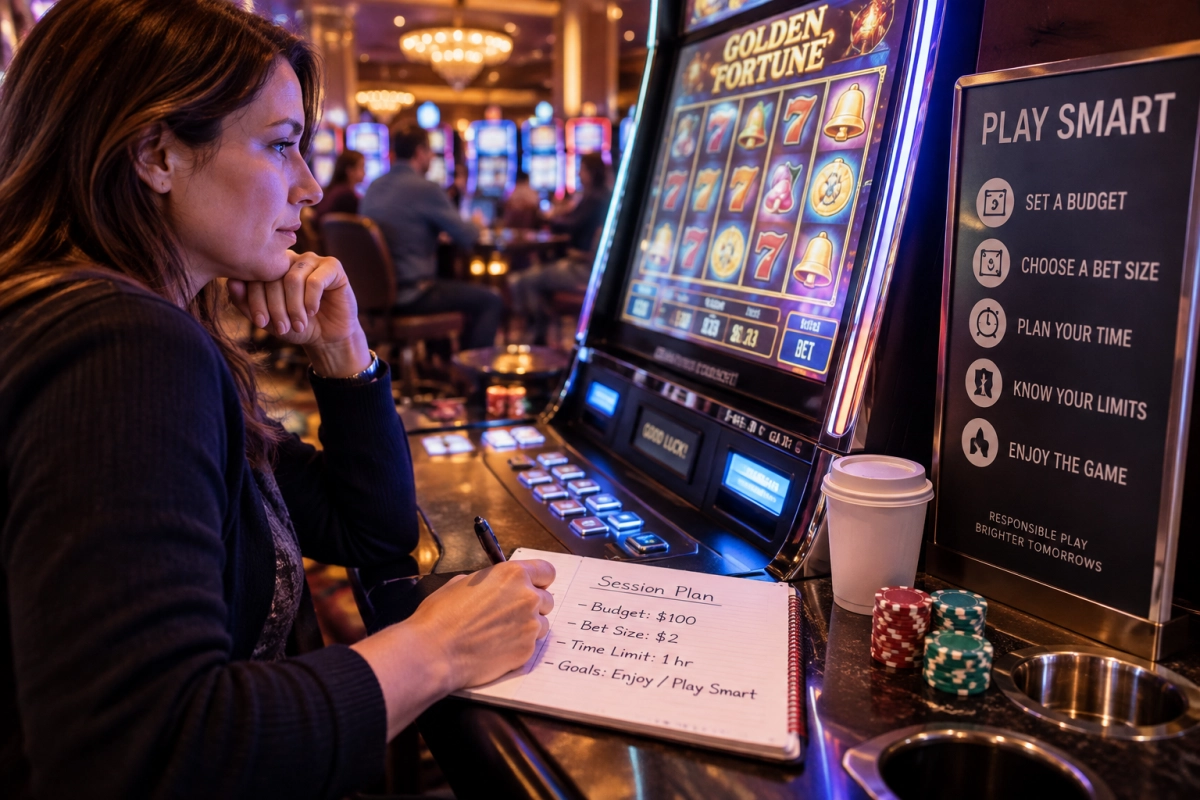
Decide the maximum amount you are comfortable losing before you open a game. Treat it as entertainment spending, not money you need for food, rent, bills, transport or savings. Set a session time limit as well, since longer play can make it harder to notice how quickly your balance is changing.
A simple planning formula is:
Planned stake per spin = session budget ÷ planned number of spins
For example, if you set aside TZS 40,000 and plan for 100 spins, the calculation gives TZS 400 per spin. This is a spending-control estimate, not a winning system. If you lose the full stake on each spin, the budget would cover 100 spins; payouts may change your balance, but they are unpredictable and do not guarantee extra play.
Before choosing a stake, check the game’s minimum and maximum bet, and whether the displayed amount is the total wager for one spin. If the minimum bet is higher than your planned amount, choose a different game or skip the session rather than stretching your budget.
- Keep the stake affordable: A lower stake generally exposes less of your budget on each spin.
- Use one consistent amount: Avoid raising your bet just because you have lost or won.
- Allow for uncertainty: Your balance can fall faster than expected, and a planned number of spins is not a promise that you will reach it.
A fixed stake makes it easier to track spending. It does not reduce the slot’s house edge or improve the probability of a particular result. Game features such as volatility and return to player (RTP) describe general characteristics or long-run theoretical figures; they cannot tell you what will happen in a short session.
Decide in Advance When to Stop
Set a stop-loss—the point at which you will end the session after losing a chosen amount. Your total budget can serve as that limit, or you can set a lower threshold and keep the remainder unspent. Also choose a time limit and stop when it arrives, rather than extending play to recover losses.
It can help to write down three rules before playing:
- Your maximum session spend.
- Your stake per spin.
- Your stopping time or session duration.
If you reach a limit, stop even if you feel that a payout is close. The next section looks at how to respond to wins and losses while keeping these limits in place.
Respond to Wins Without Raising Your Stake
A win can make it tempting to increase your bet or keep playing because you feel you are “ahead.” Neither choice changes the odds of the next spin. Keep to the stake you chose before starting, and follow your time and spending limits even if your balance has increased.
If you want to leave with some of a win, decide in advance how you will handle it. For example, you might stop when the session reaches a balance you have set as a personal exit point. Treat that point as a reminder to review your plan, not as a target the game is likely to reach. A slot can give back winnings on later spins, and no amount of play guarantees that a balance will hold or grow.
Check the game or casino’s withdrawal rules before playing, including any minimum withdrawal amount or conditions attached to bonuses. If you choose to cash out, do not put the money back into play simply because it is already in your account. A win is not a reason to extend the session or use money you had set aside for something else.
Handle Losses Without Chasing Them
When a session goes badly, avoid increasing your stake to try to recover what you have lost. Larger bets can use up the remaining budget more quickly, while the previous spins do not make a payout more likely. The same applies to switching games because one seems “due” or because another has recently paid out.
When you reach your loss limit, close the game rather than making one more deposit or borrowing to continue. If you feel frustrated, anxious or focused on winning back the money, take a break and step away from gambling. You can also use available account tools—such as deposit limits, time reminders, cooling-off periods or self-exclusion—to make it easier to stick to your decision.
Do not treat a planned budget as an amount you must spend. If you decide to stop early, you can leave the unspent balance untouched. A session plan is there to limit exposure, not to justify playing until every available dollar is gone.
Review the Session and Keep the Plan Simple
After you stop, note how long you played, how much you deposited, what you spent and whether you followed your limits. A short record can help you see whether your chosen stake and session length are comfortable over time. It is not a way to identify a pattern that predicts future results: each spin remains uncertain, and past outcomes do not provide a reliable signal for the next one.
If you repeatedly exceed your limits, consider lowering them, taking a longer break or not playing. Avoid changing your plan in response to a single win or loss. Consistent limits make spending easier to monitor, but they do not turn slot play into a dependable way to earn money.
Keep Slot Play Within Its Limits
Slot play should remain an optional form of entertainment, never a way to cover expenses or make money. If it stops feeling enjoyable or your limits become difficult to follow, stepping away is a sensible choice.
A Practical Guide to Slot Bet Sizing and Session Planning
Plan Your Slot Session Before You Start
Slot bet sizing and session planning can help you control how much you spend and how long you play. They cannot predict a result or change a slot’s odds. This guide explains how to set a budget, choose a consistent stake and make decisions after wins or losses without relying on betting systems.
Slots use random outcomes, so one spin does not tell you what the next spin will bring. A recent win does not make a loss “due,” and a run of losses does not guarantee that a win is coming. Betting patterns sometimes described as slots payout strategies may organise your spending, but they do not make the machine more likely to pay.
Set a Budget and Choose a Stake You Can Maintain
Decide the maximum amount you are comfortable losing before you open a game. Treat it as entertainment spending, not money you need for food, rent, bills, transport or savings. Set a session time limit as well, since longer play can make it harder to notice how quickly your balance is changing.
A simple planning formula is:
Planned stake per spin = session budget ÷ planned number of spins
For example, if you set aside TZS 40,000 and plan for 100 spins, the calculation gives TZS 400 per spin. This is a spending-control estimate, not a winning system. If you lose the full stake on each spin, the budget would cover 100 spins; payouts may change your balance, but they are unpredictable and do not guarantee extra play.
Before choosing a stake, check the game’s minimum and maximum bet, and whether the displayed amount is the total wager for one spin. If the minimum bet is higher than your planned amount, choose a different game or skip the session rather than stretching your budget.
- Keep the stake affordable: A lower stake generally exposes less of your budget on each spin.
- Use one consistent amount: Avoid raising your bet just because you have lost or won.
- Allow for uncertainty: Your balance can fall faster than expected, and a planned number of spins is not a promise that you will reach it.
A fixed stake makes it easier to track spending. It does not reduce the slot’s house edge or improve the probability of a particular result. Game features such as volatility and return to player (RTP) describe general characteristics or long-run theoretical figures; they cannot tell you what will happen in a short session.
Make Your Limits Practical
A limit is easier to follow when you decide how it will work before opening the game. Consider keeping session money separate from funds for everyday needs, and avoid adding more money once play begins. If your account offers deposit or loss limits, set them before the session rather than relying on a decision made while you are playing.
- Choose a clear amount: Write down the maximum you will spend, including any deposits made during the session.
- Make stopping simple: Decide what action you will take at the limit, such as closing the game and signing out.
- Plan for interruptions: Stop if you need to attend to work, family or another responsibility instead of playing while distracted.
Do not count an available credit balance, a bonus or a possible future win as part of your budget. Promotional terms can include restrictions, and bonuses are not guaranteed cash. Read the conditions carefully and decide whether they fit your plan before accepting an offer. If the terms are unclear, you can decline it and play without the promotion.
It may also help to tell a trusted person about the limit you have set, especially if you have found it difficult to stop in the past. This is not a substitute for account controls, but a check-in can help you pause and keep the session within the boundaries you chose.
Decide in Advance When to Stop
Set a stop-loss—the point at which you will end the session after losing a chosen amount. Your total budget can serve as that limit, or you can set a lower threshold and keep the remainder unspent. Also choose a time limit and stop when it arrives, rather than extending play to recover losses.
It can help to write down three rules before playing:
- Your maximum session spend.
- Your stake per spin.
- Your stopping time or session duration.
If you reach a limit, stop even if you feel that a payout is close. The next section looks at how to respond to wins and losses while keeping these limits in place.
Respond to Wins Without Raising Your Stake
A win can make it tempting to increase your bet or keep playing because you feel you are “ahead.” Neither choice changes the odds of the next spin. Keep to the stake you chose before starting, and follow your time and spending limits even if your balance has increased.
If you want to leave with some of a win, decide in advance how you will handle it. For example, you might stop when the session reaches a balance you have set as a personal exit point. Treat that point as a reminder to review your plan, not as a target the game is likely to reach. A slot can give back winnings on later spins, and no amount of play guarantees that a balance will hold or grow.
Check the game or casino’s withdrawal rules before playing, including any minimum withdrawal amount or conditions attached to bonuses. If you choose to cash out, do not put the money back into play simply because it is already in your account. A win is not a reason to extend the session or use money you had set aside for something else.
Handle Losses Without Chasing Them
When a session goes badly, avoid increasing your stake to try to recover what you have lost. Larger bets can use up the remaining budget more quickly, while the previous spins do not make a payout more likely. The same applies to switching games because one seems “due” or because another has recently paid out.
When you reach your loss limit, close the game rather than making one more deposit or borrowing to continue. If you feel frustrated, anxious or focused on winning back the money, take a break and step away from gambling. You can also use available account tools—such as deposit limits, time reminders, cooling-off periods or self-exclusion—to make it easier to stick to your decision.
Do not treat a planned budget as an amount you must spend. If you decide to stop early, you can leave the unspent balance untouched. A session plan is there to limit exposure, not to justify playing until every available dollar is gone.
Review the Session and Keep the Plan Simple
After you stop, note how long you played, how much you deposited, what you spent and whether you followed your limits. A short record can help you see whether your chosen stake and session length are comfortable over time. It is not a way to identify a pattern that predicts future results: each spin remains uncertain, and past outcomes do not provide a reliable signal for the next one.
If you repeatedly exceed your limits, consider lowering them, taking a longer break or not playing. Avoid changing your plan in response to a single win or loss. Consistent limits make spending easier to monitor, but they do not turn slot play into a dependable way to earn money.
Keep Slot Play Within Its Limits
Slot play should remain an optional form of entertainment, never a way to cover expenses or make money. If it stops feeling enjoyable or your limits become difficult to follow, stepping away is a sensible choice.